Advancing Affordable Electric Vehicle Charging for Renters
Community-driven solutions for affordable public and multifamily on-site electric vehicle charging
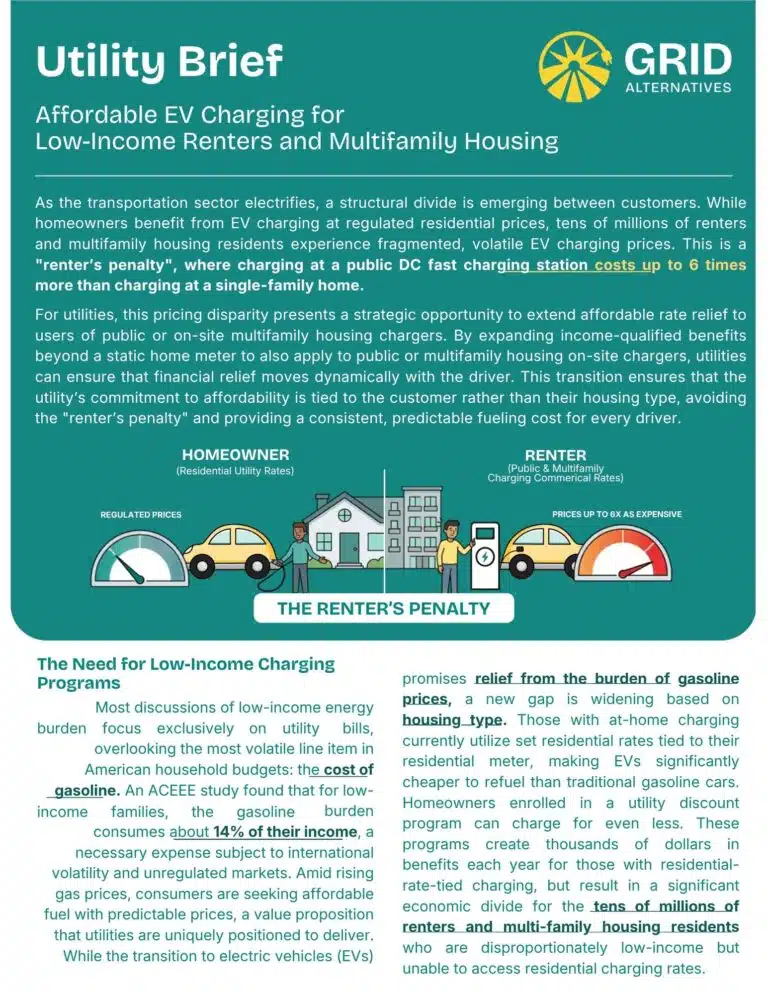
A divide is growing in the transportation electrification sector, and not just between those with EVs and those without. A financial gap is developing between homeowners who benefit from regulated residential EV charging and tens of millions of renters and multifamily housing residents who experience fragmented, volatile EV charging prices. This is a “renter’s penalty”, where on-site multifamily or public charging can cost 2-6x more than charging on a standard residential meter.
For utilities, this pricing disparity presents a strategic opportunity to extend affordable rate relief to users of public or on-site multifamily housing chargers. By separating income-qualified benefits from a static home meter to then apply to public or multifamily housing on-site chargers, utilities can ensure that financial relief moves dynamically with the driver. This transition ensures that the utility’s commitment to affordability is tied to the customer’s account rather than their housing type, effectively eliminating the “renter’s penalty” and providing a consistent, predictable fueling cost for every driver.
The Opportunity
By creating an affordable EV charging program for low-income and multifamily housing customers, utilities can:
- Optimize System Load Factor: Tiered pricing structures can incentivize charging during periods of solar over-generation or low demand, optimizing grid utilization, reducing strain during peak hours, and potentially avoiding costly distribution upgrades.
- Maximize Asset Utilization: Closing the affordability gap ensures that the utility’s investment in transportation electrification infrastructure reaches its full potential. By expanding the user base to include the LMI rental segment, utilities prevent under-utilization of public and multifamily charging assets.
- Partner in Affordability: By closing the price gap, utilities move from being a “bill in the mail” to a partner in a household’s economic resilience. Offering low-income charging programs demonstrates a commitment to affordability for households that need savings the most.