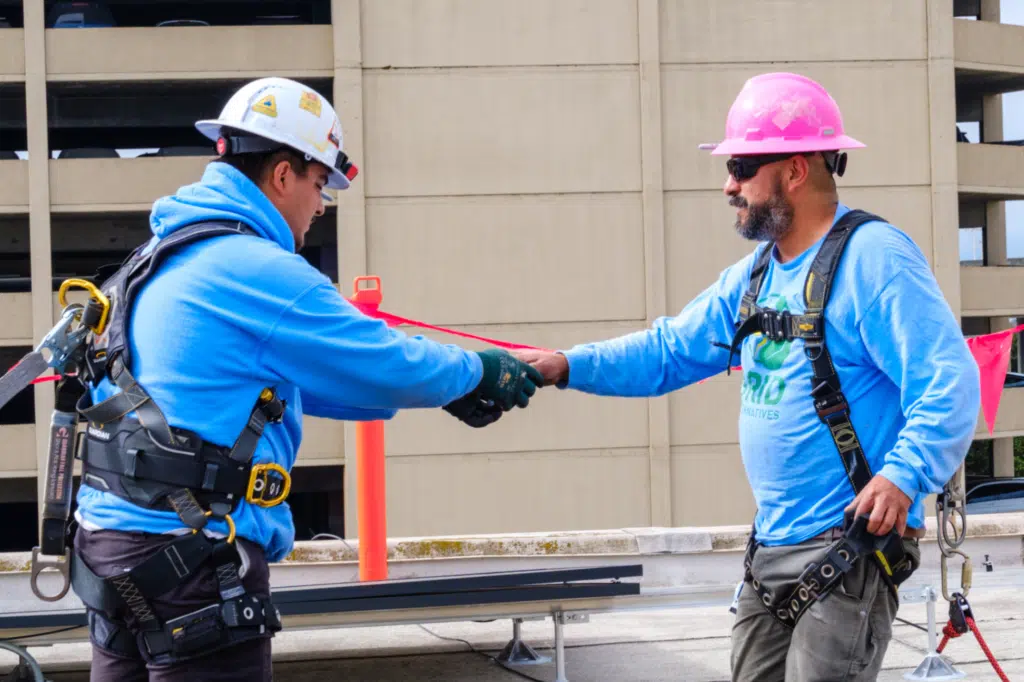
Cahuilla Express Brings Zero-Emission Transportation to the Anza Valley
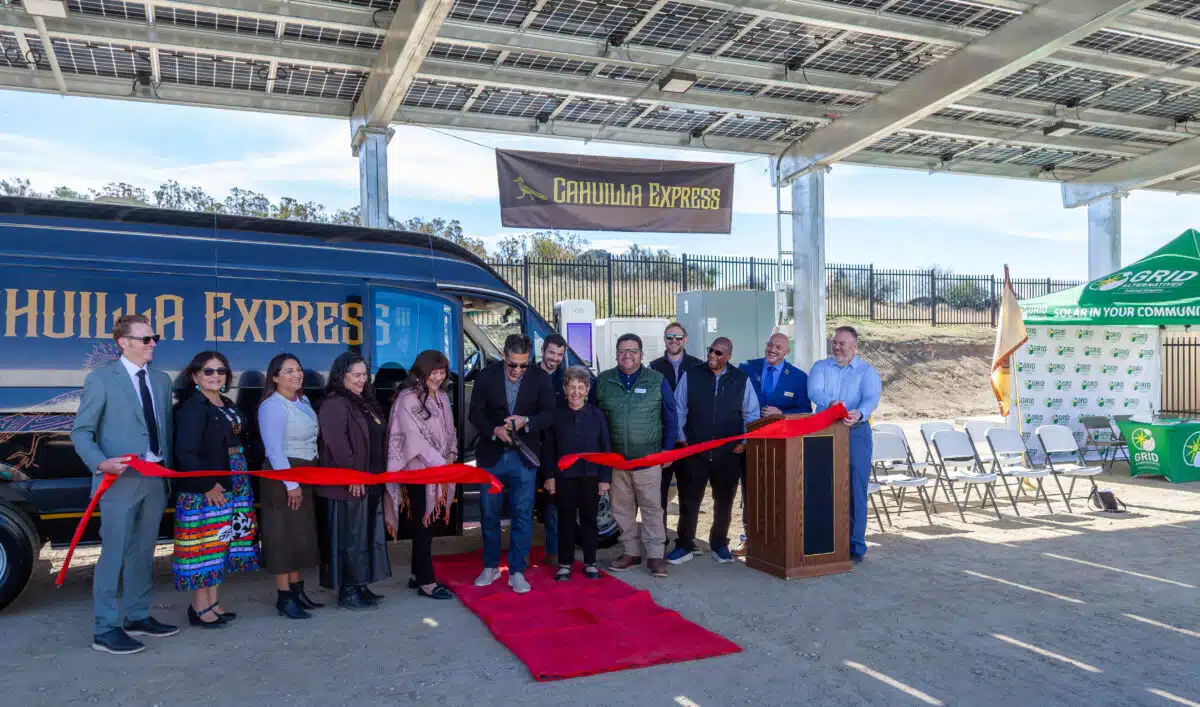
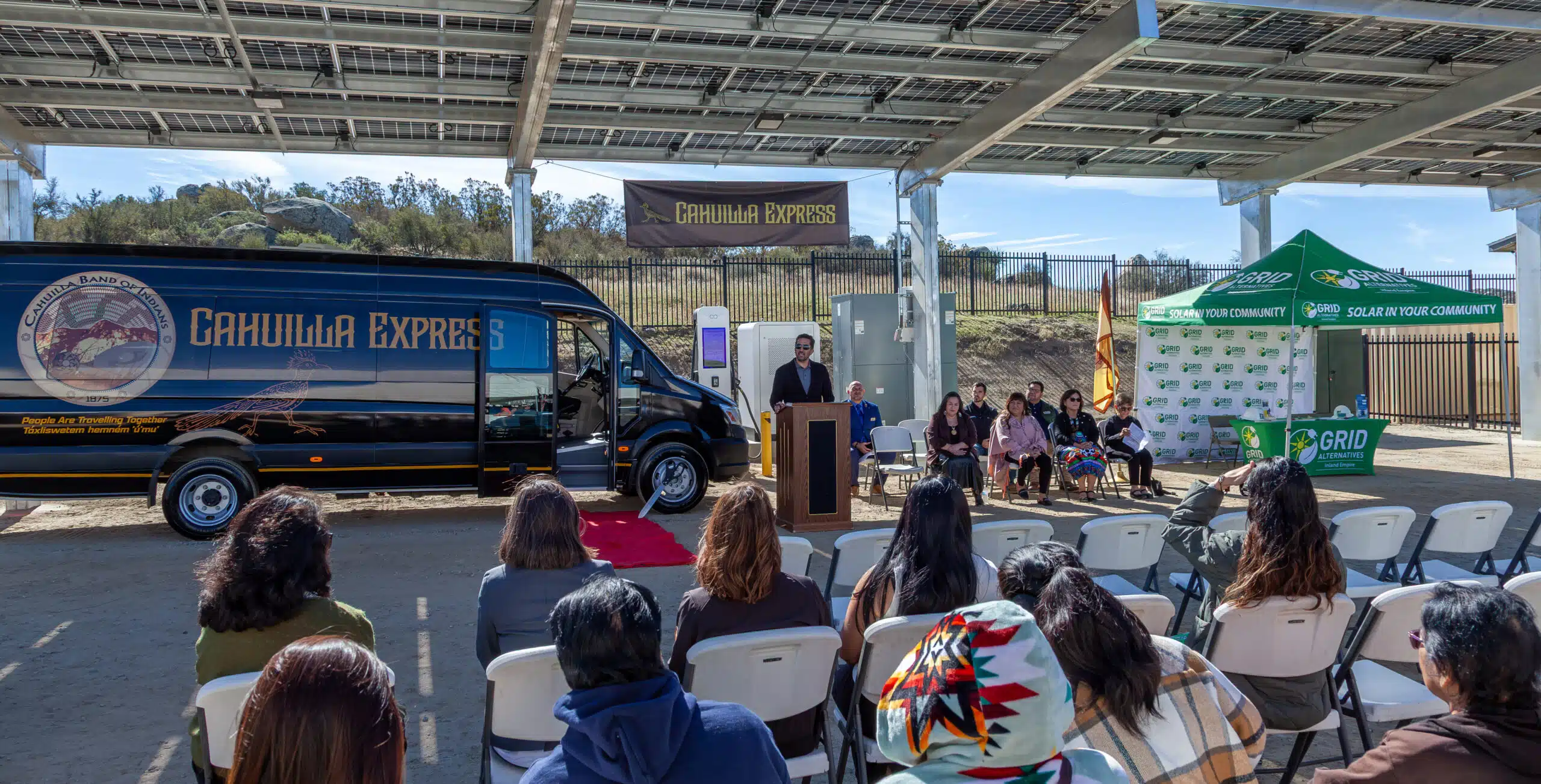
GRID Alternatives and the Cahuilla Band of Indians celebrated the ribbon-cutting for the Tribe’s Cahuilla Express Zero Emissions Shuttle on Wednesday, October 28, 2026. The project marks an important investment in transportation access for the greater Anza area, connecting community mobility needs with California’s vision for a cleaner, more equitable transportation future.
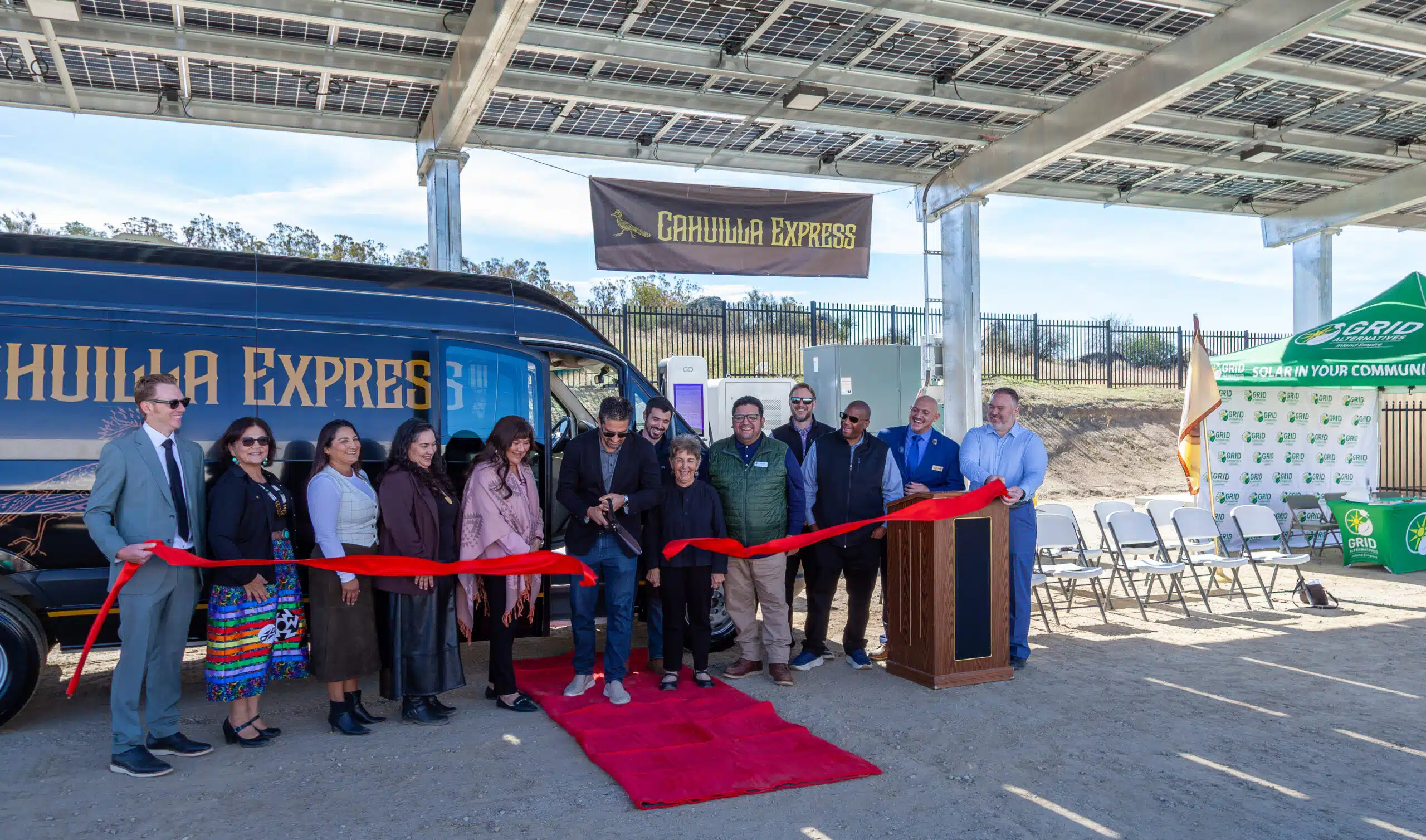
Cahuilla Tribal Council Vice Chairman Steven Leash Jr. cutting the ribbon.
The Cahuilla Express is designed to strengthen access to essential services and community activities, including opportunities for Elders, youth, and Tribal members. By pairing zero-emission transportation with on-site solar and charging infrastructure, the project also creates a more integrated approach to clean mobility for the community. The project reflects the Tribe’s commitment to addressing local needs through transportation investments that support community well-being and environmental stewardship.
Funded through the Clean Mobility Options (CMO) Program, supported by the California Air Resources Board (CARB), the Cahuilla Express project, including the zero-emission shuttle and supporting clean energy infrastructure, advances a statewide effort to expand access to clean, shared transportation in underserved communities. The program supports community-driven solutions that address transportation barriers while reducing greenhouse gas emissions and harmful air pollution.
The completion of the shuttle represents another step in the Tribe’s green energy efforts. The bus will serve more than 180 people who live on the reservation. For years, the reservation has been underserved by transportation providers, and its geography and topography have left residents with limited transportation options. On the National Walkability Index, the reservation is rated “least walkable.” According to the Housing + Transportation Index, Cahuilla’s residents spend about 33% of their income on housing and 31% on transportation costs. This indicates transportation costs are significantly high for residents, as many must travel to jobs and services in neighboring cities like Hemet and Temecula, which are both 30 miles from the reservation.
To further support the need for reliable, green, and efficient transportation, GRID and the Cahuilla Tribe conducted a community survey of all Tribal members. Some key takeaways from the survey include:
- 70% of members on the reservation drive alone.
- 37% would be interested in a free or discounted dial-a-ride service.
- 33% would be interested in free or discounted car share rides.
- 30% are interested in free or discounted public transit passes.
- 32% said it is important to them that transportation does not contribute to air pollution.
- 45% said air pollution affects them personally.
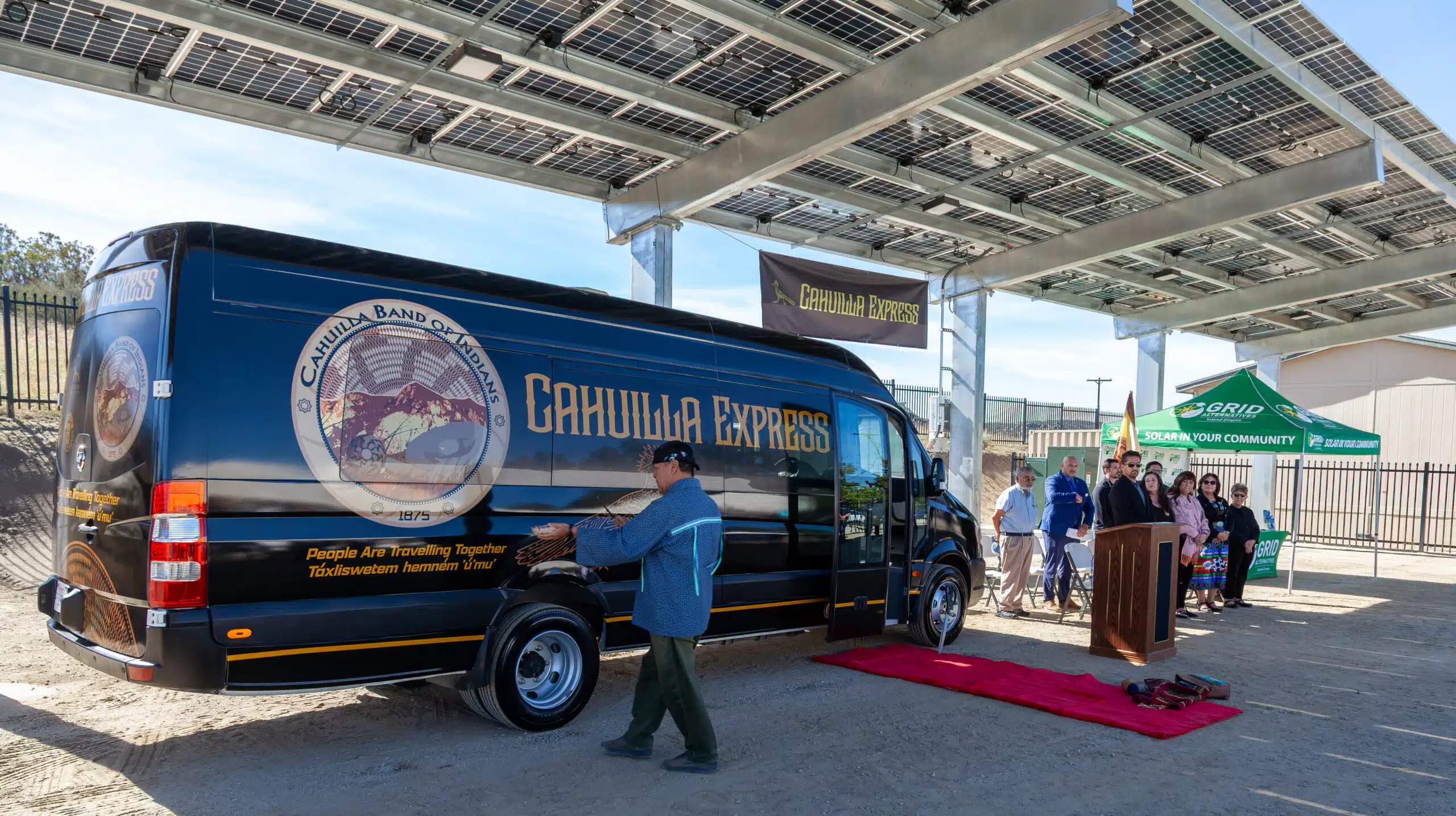
Tribal member Michael Madrigal performing a blessing for the shuttle.
Based on the community’s feedback, the Tribe identified a shuttle service as the best fit for residents’ transportation needs. Residents wanted a shuttle that could take them to the neighboring cities of Anza, Temecula, Hemet, and Palm Springs, where they regularly traveled for work, school, shopping, and medical appointments. GRID Alternatives partnered with the Cahuilla Band of Indians to support the clean energy infrastructure behind the Cahuilla Express, including the installation of a solar carport and Level 3 electric vehicle charging equipment. Together, the shuttle and supporting infrastructure demonstrate how clean transportation and renewable energy investments can be designed around the specific needs of rural and Tribal communities. The converted diesel bus can hold 14 riders, including two wheelchairs.
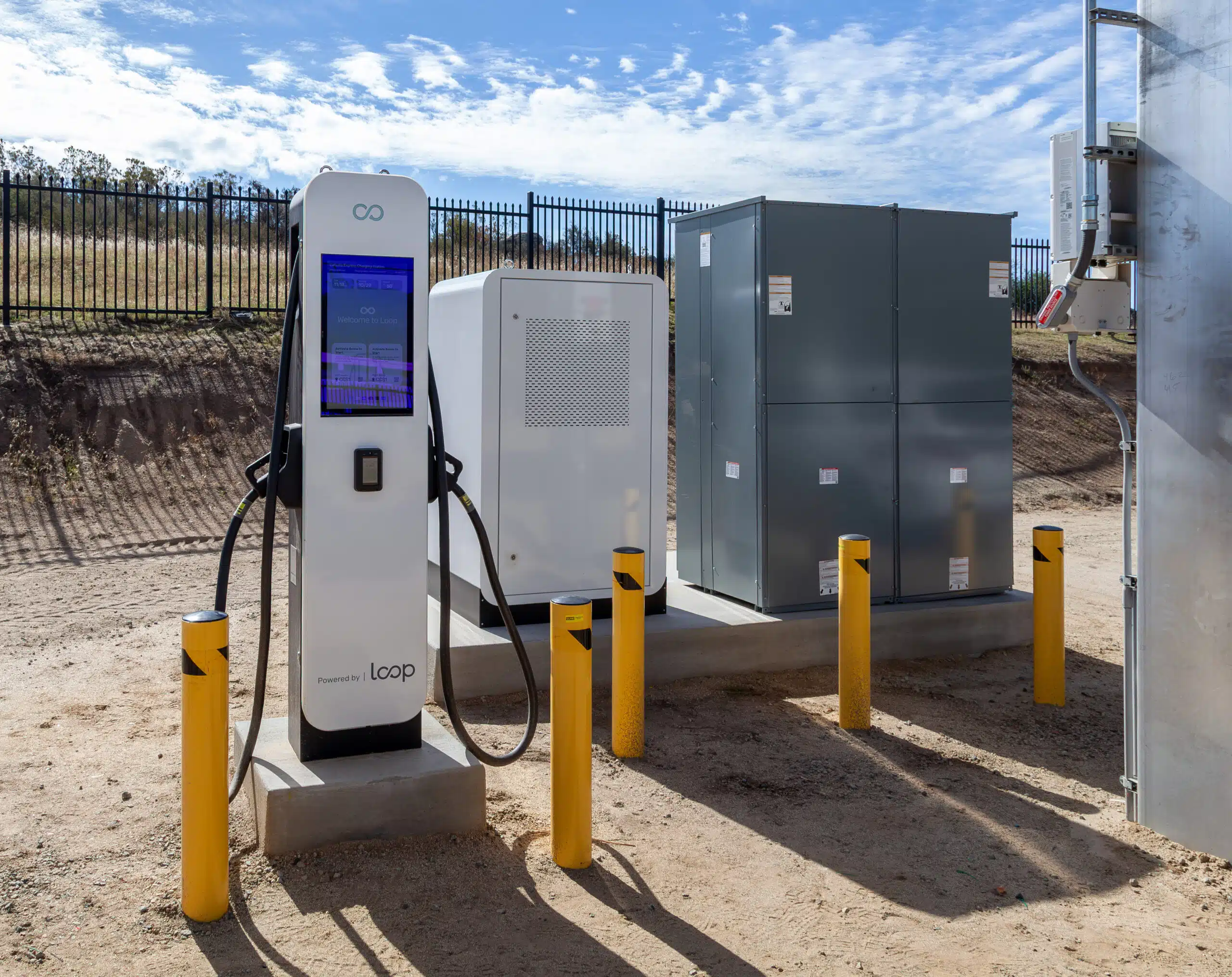
The fast charger for the Cahuilla Express Shuttle.
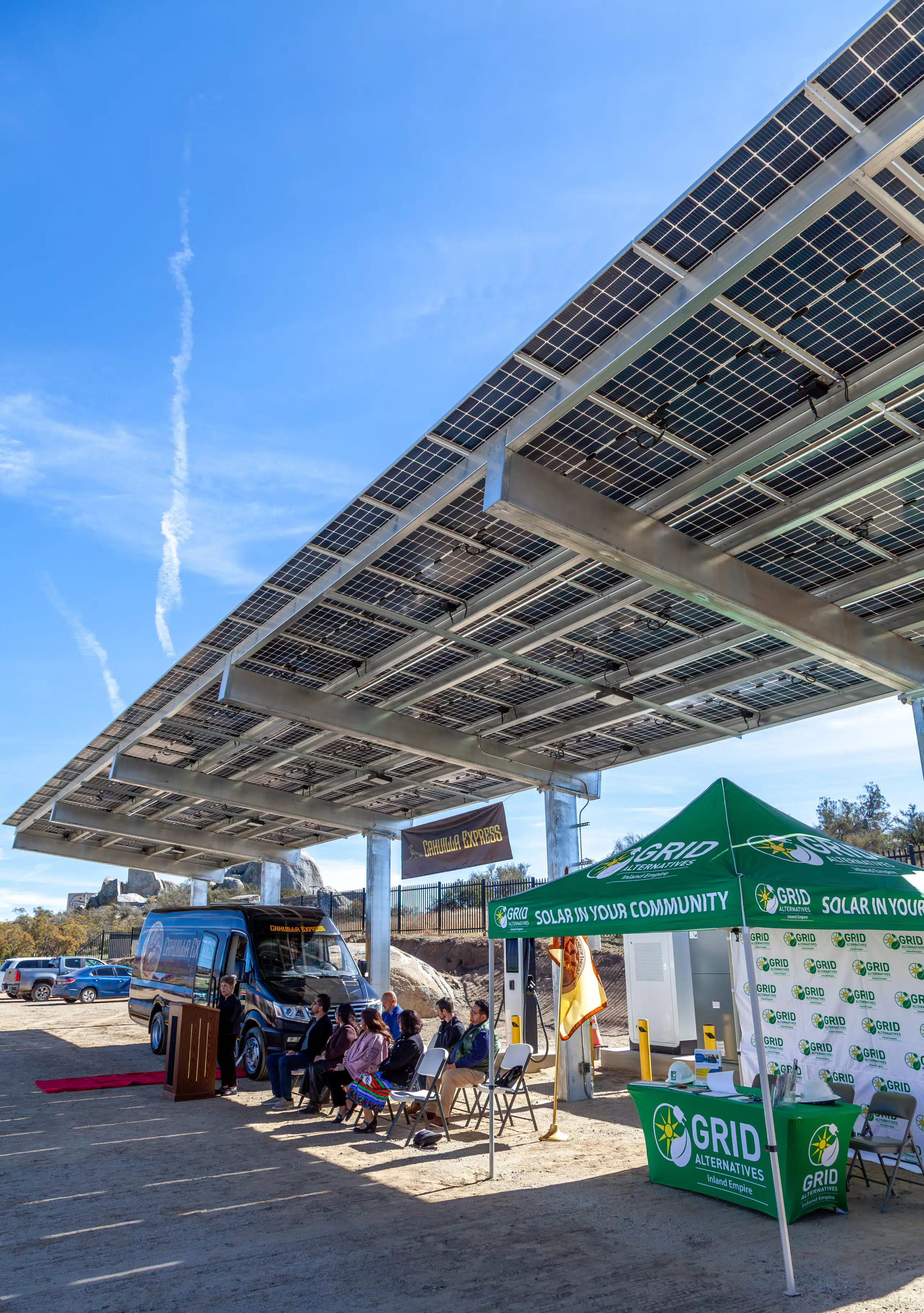
After years of planning and collaboration, GRID staff, Cahuilla Tribal leaders, and project partners gathered to celebrate the completion of the Cahuilla Express.
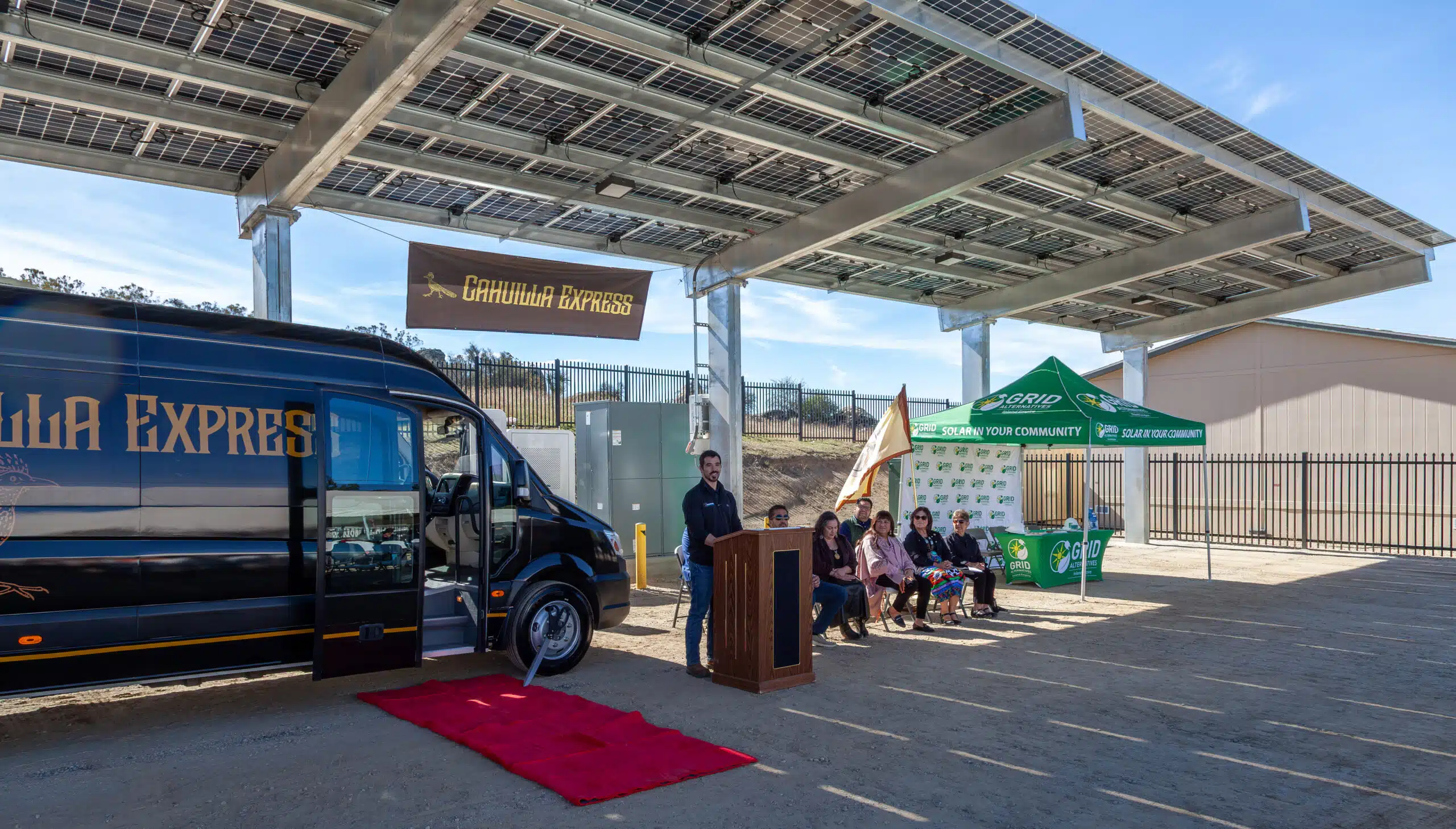
Garrett Pewe of Sovereignty Construction
Garrett Pewe of Sovereignty Construction, who partnered on the project, said he was overwhelmed with gratitude.
“It takes a tremendous amount of stakeholders and people coming together within the community and other areas of the state to complete a project like this,” dijo. “Over the past five years, the Tribal Council continued their support of the project. I want to thank GRID Alternatives for all their help and support, including the thousands of emails throughout the entire community engagement process. This project allows the Tribe to continue to support the elders in the community and also the youth when traveling to sports activities down the hill.”
California Air Resources Board Representative Diane Takvorian
California Air Resources Board Representative Diane Takvorian said the project is a dream come true.
“It’s truly an honor to be here,” dijo ella. “I have so much respect and gratitude for the work that it has taken to get to this point, this celebration. It is a momentous occasion for the Cahuilla Band and for everyone in this community.”
Takvorian described how the California Air Resources Board is the state agency charged with protecting public health from air pollution and fighting climate change. Transportation accounts for about 50% of all greenhouse gases that cause climate change, which is one of the board’s major focuses. Air pollution from cars, trucks, and other vehicles is a primary driver of environmental and public health damage.
“We know not only does this project reduce air pollution, but it also brings opportunity,” Takvorian continued. “We know that opportunity is about getting to a community event, getting to work, getting to school, getting to a doctor’s appointment. All of those things help us have a higher quality of life. And that’s what everybody needs. So while we’re getting cleaner air, we’re also getting access to opportunities that we might not have had.”
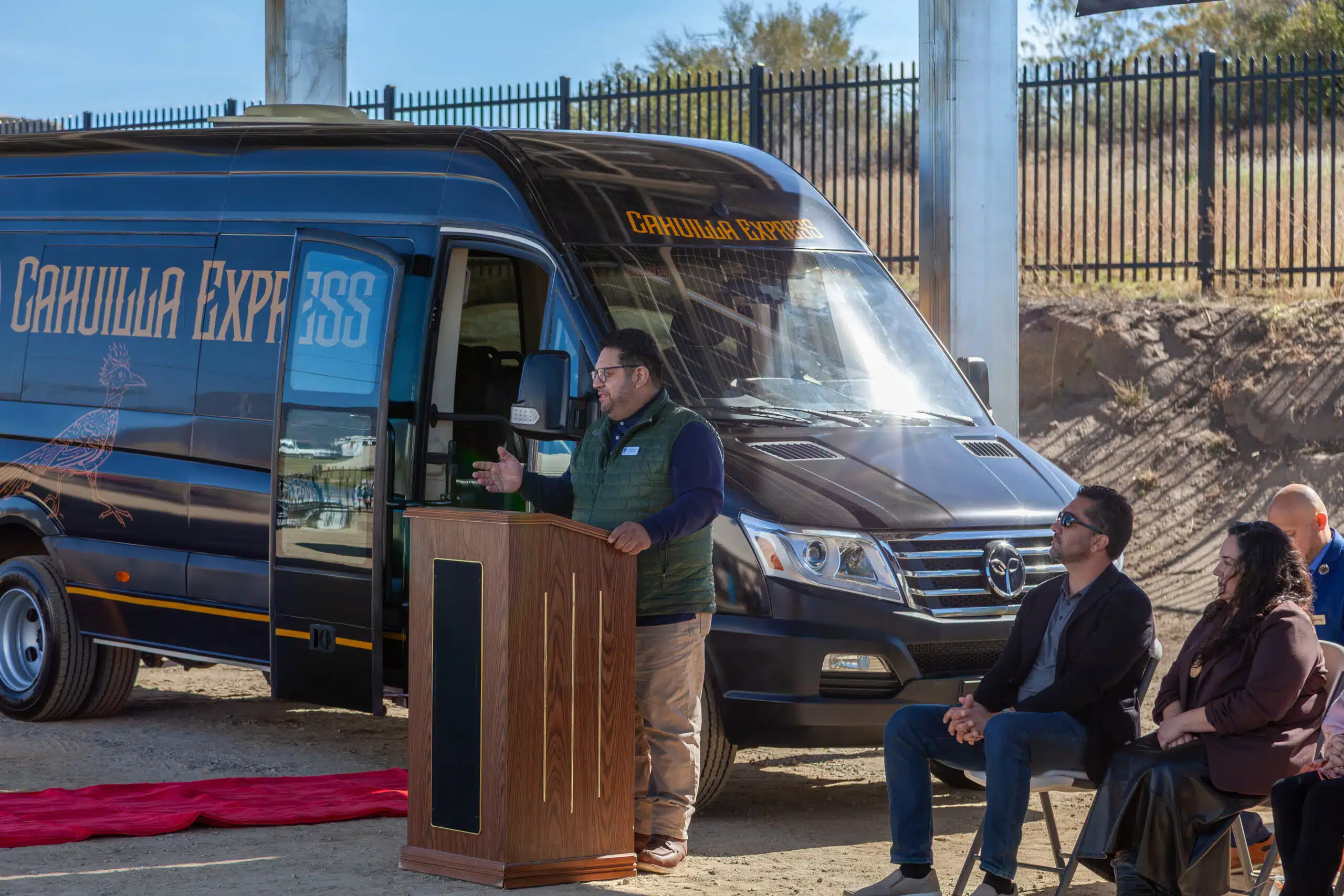
Jaime Alonso, GRID Alternatives Executive Director, Southern California
GRID’s Executive Director for Southern California Jaime Alonso said the project represents a transition away from fossil fuels to reliable energy.
“When we talk about cars, we talk about horsepower, but the Cahuilla Express is solar power,” said Alonso. “Transition takes a lot of effort and a lot of collaboration. GRID doesn’t do this work alone. We do it in partnership with the communities we serve and build out projects that are responsive to the community’s needs.”
For Cahuilla residents, the Express represents more than a new transportation option. It offers a way to reach medical appointments, grocery stores, and other essential services that can be difficult to access from the reservation. With the solar and charging infrastructure in place, the Tribe also has opportunities to expand its clean transportation services in the future.
Tribal Council Vice Chairman Steven Leash Jr
As Tribal Council Vice Chairman Steven Leash Jr. put it, “This is a win for the Tribe, and we need more of it.”