Celebrando el éxito de los negros en GRID: Arthur Bart-Williams
GRID celebra el Mes de la Historia Negra y Mes del Futuro Negro celebrando el logro de personas negras en GRID —en febrero y durante todo el año. Sigue nuestra historia mientras presentamos a los miembros del personal de GRID cuya labor y influencias están impulsando nuestra visión de un futuro energético justo.
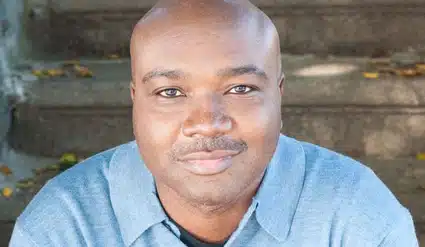
Meet Arthur Bart-Williams, Executive Director of GRID Bay Area. Arthur joined GRID in 2020, during the pandemic, with an over 20-year career that includes construction management, program/project management, product management, and entrepreneurship.
¿Cómo llegaste a GRID?
A friend of mine sent me a link and said “Hey, this sounds like you.” I had been doing the serial entrepreneur thing for a long, long time and after spending the better part of a year and a half commuting to and from New Orleans, my wife forced me to slow down. I realized how burned out I was and I thought, maybe it’s time to see what’s next. It took a while for me to get used to the idea of getting a regular job. Then I got this job description and what stood out to me was they were looking for someone who was entrepreneurial, and I thought I wonder how serious they are about that. I have a background in civil engineering and project management and entrepreneurship, but the only solar background was what we had installed on our roof.
¿Cuál es tu parte favorita de lo que haces en GRID?
Similar to what I enjoyed as an entrepreneur, day to day you don’t know what you’re going to be doing. You’re not stuck in a box. In this role, it’s like managing six or seven companies in one. Getting a handle on all of that has been a great challenge. The variety of the different goals, tasks, businesses and people, and underlying all of that is the team aspect of it.
I came on in this unusual time, all I’ve known is people on the screen. But I know the impact that we have, and the way I expand and sustain that impact is through our team. How can I get out of the way and actually help in what they’re trying to do, from visioning to being a thought partner, to being a provocateur, to being an advocate? And just bringing all the experiences that I’ve collected over my career to bear.
¿Quiénes son algunos de los creadores de la historia negra actuales que la gente debería conocer o que han influido en su trabajo?
I attended the Facing Race conference last year, and the keynote speaker was Rev. Dr. William J. Barber II. He’s a great speaker and orator. His keynote speech was centered around the third reconstruction and it was a very memorable talk for me because I’m a huge fan of context. Context is decisive, when the context is clear everything makes way more sense and it can shift things just like that (snaps). He started talking about the third reconstruction, and going back to the history of the first and second reconstructions and how with each of those there was progress made and then almost immediately a backlash to that. And then he framed what’s going on now as another period of reconstruction and guess what, expect a backlash, in fact we’re in it. He talked about what it’s going to take to not repeat history and go backwards, creating a moral and multiracial coalition — it all just connected the dots for me. It was a great history lesson, it was inspiring and it ended up being a call to action.
¿Cuál es la primera cosa en la que GRID está trabajando actualmente y que realmente te entusiasma ver que se lleve a cabo este año?
It’s about getting the message out about GRID. I’m still new enough to ask the question, how come more people don’t know about us? We’ve had two new staff members within the last month or so who’ve come in and asked the same question. There are obviously lots of ways to do that, but one way I’m excited about is through this capital campaign that started out as a question and a wild idea. Part of what makes me excited about it is the timing. This is not a new story for GRID, but I think at this moment in time, there’s a window. We can say, hey look, this is already happening, we just need to do more of it and we can solve all these problems that you’re talking about.
¿Cuál es su visión de un futuro justo desde el punto de vista medioambiental?
The word that keeps coming up for me is sustainability. Sustainability not just for the planet, but all the way down. At the community level, so that the communities we serve are benefiting in all the ways possible, economically, righting wrongs of inequity. And then at the organizational level, speaking for GRID, being sustainable so we can grow, and take advantage of the opportunities. And then we get down to even the personal sustainability. I’m somebody who can be driven, and with compartmentalizing you forget everything else and get out of balance and that’s not good. How do you walk the talk for sustainability, not just for the planet but down to the individual level? That’s a vision that I think would be great.