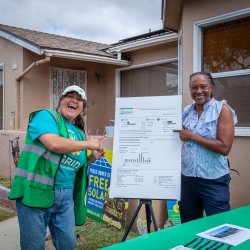
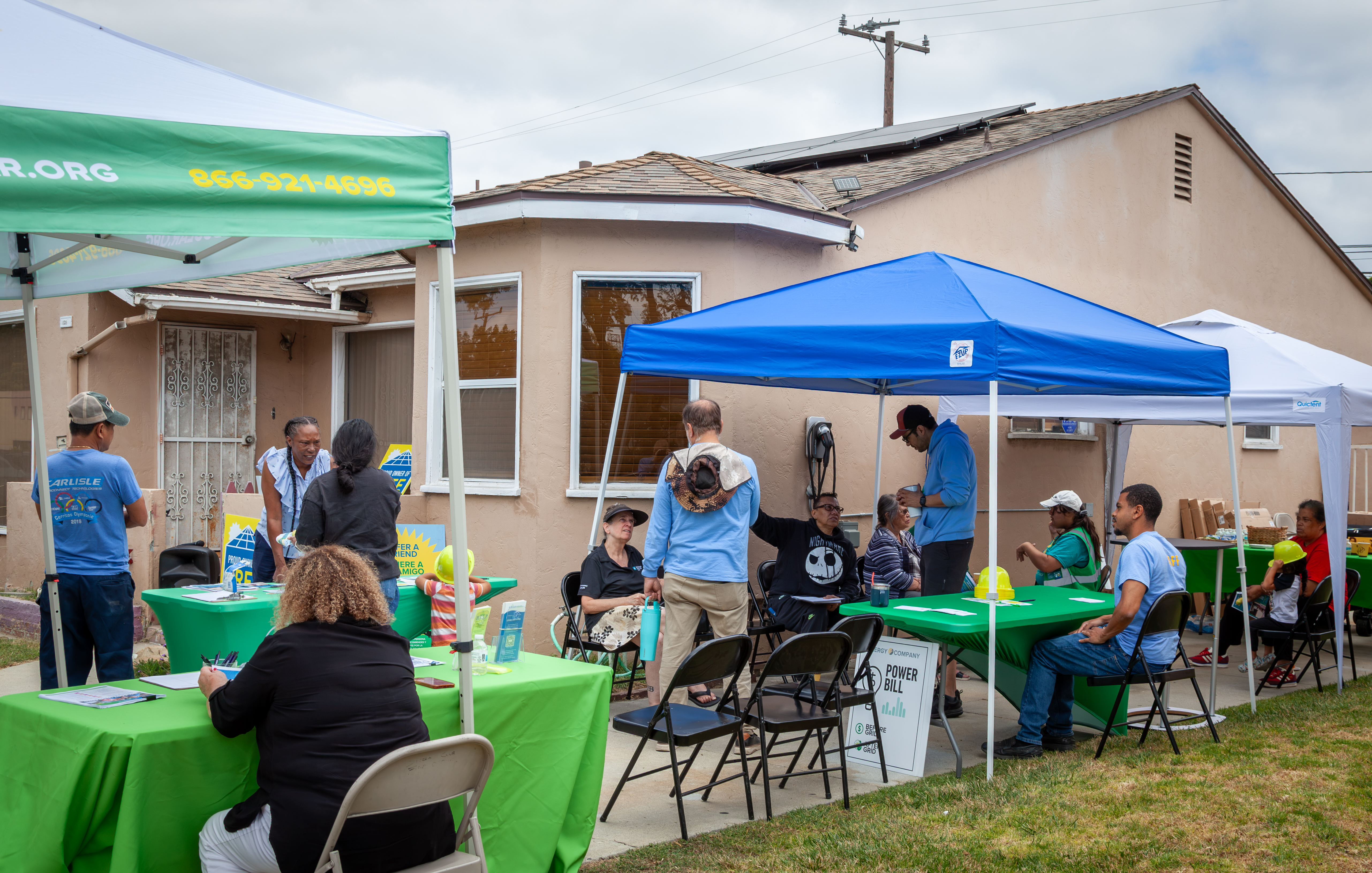
A Long Beach open house gave Pamela’s friends and neighbors a close look at her new solar system, her $8.24 electric bill, and the savings available through GRID Alternatives Southern California.
Pamela West has lived in Long Beach for 52 years. On Saturday, June 27, she opened her home to neighbors, friends, and GRID Alternatives Southern California staff to share what happened after she decided to go solar.
The result was displayed prominently in front of her home: an enlarged copy of her latest Southern California Edison bill showing a total of just $8.24.
Before her solar system was installed, Pamela said her monthly electric bills were often between $200 and $300.
“It was scary,” she said. “It was almost matching my car insurance bill.”
Her reaction to seeing the first bill after her system began operating was very different.
“Oh, man, I was so happy to pay that bill,” Pamela said. “I thought it was like a dream. It was something I needed to do a long time ago.”
Pamela’s system was installed at no cost through the Disadvantaged Communities Single-Family Solar Homes program, commonly known as DAC-SASH. The California program helps income-qualified homeowners in designated disadvantaged communities receive no-cost rooftop solar. GRID Alternatives administers DAC-SASH and works directly with qualifying households throughout the application, design, and installation process.
Pamela had explored solar before connecting with GRID, but quotes and agreements from other companies raised concerns for her family.
“I was glad to find that it didn’t compromise the ownership of the house or anything like that,” she said. “With some of the other companies I had gotten quotes from, those were concerns that my parents and I were worried about.”
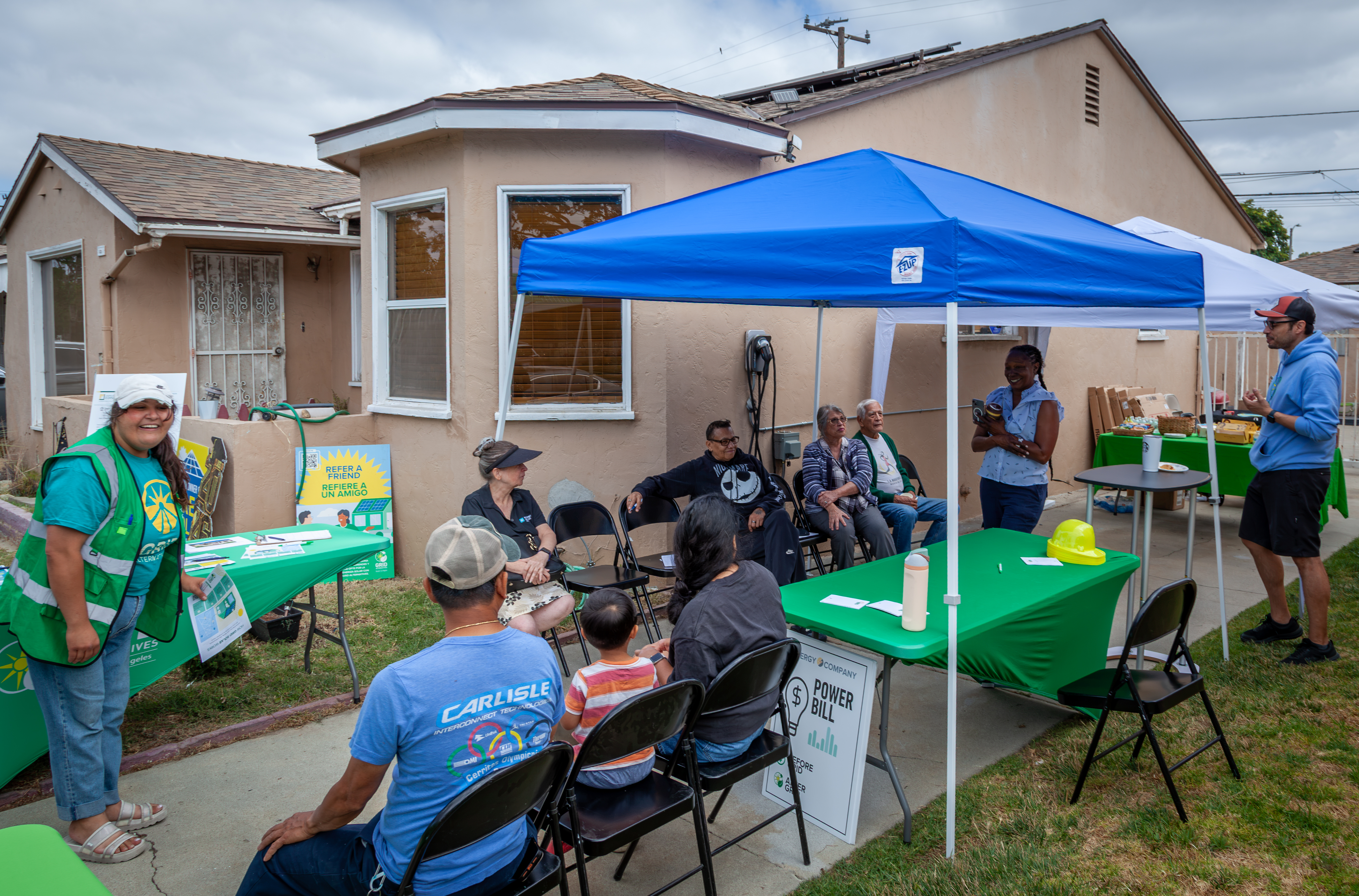
The open house was led by GRID SoCal Outreach Coordinator Michelle Mata and gave residents an opportunity to see an operating solar system, ask questions about the program, and learn whether their own households might qualify.
GRID SoCal’s Outreach team canvassed the surrounding neighborhood on the morning of the event. Pamela also played a major role in bringing people together. In the days leading up to the open house, she spoke with friends and neighbors and encouraged them to attend.
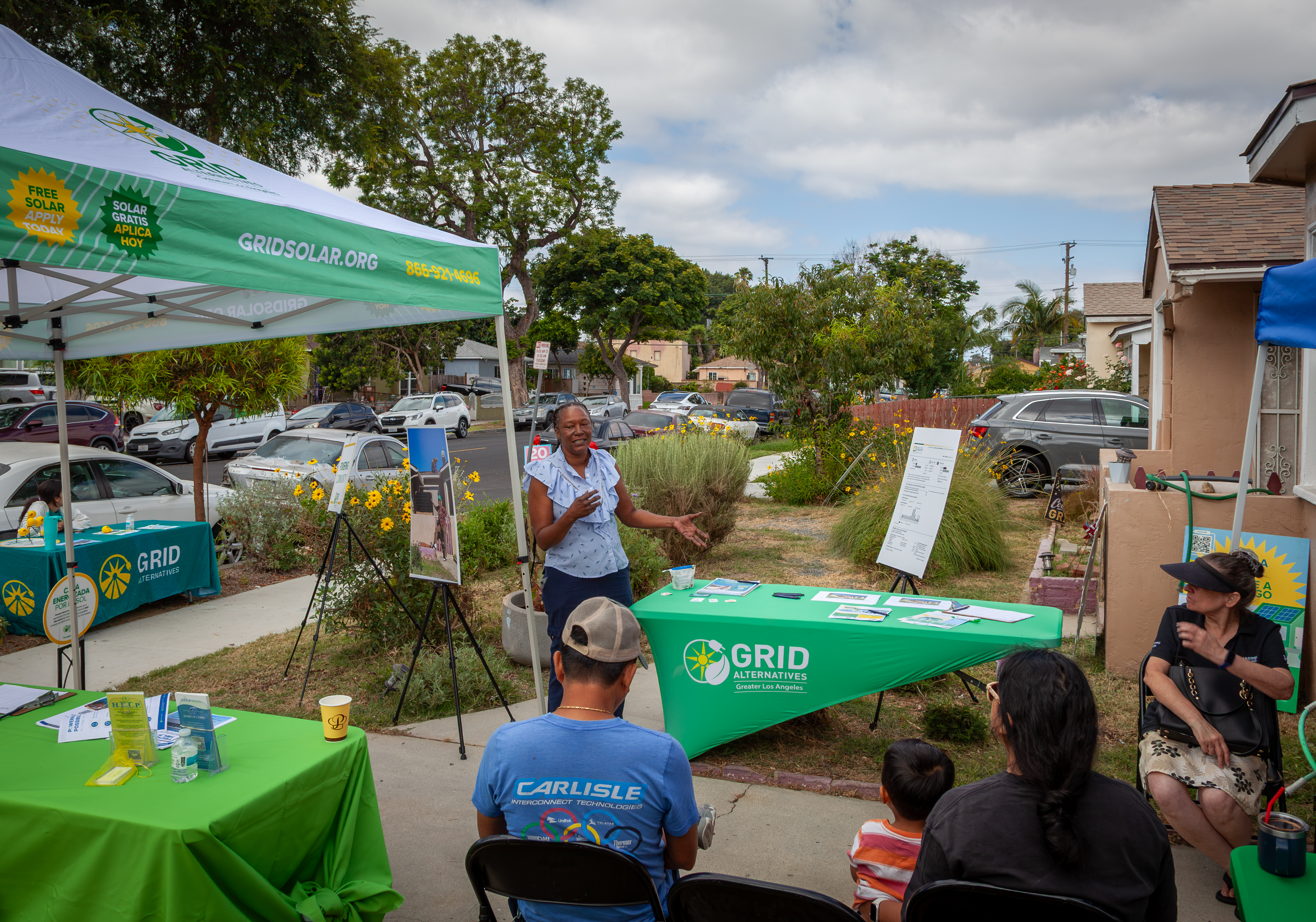
About 20 people came to the event, including many residents Pamela has known for much of her life.
“It brings me joy to see that my neighbors are going to have the same savings as I am,” she said. “Most of the people who came today have been my neighbors for two or three decades.”
The event allowed attendees to hear directly from someone they knew and trusted. Pamela spoke openly about her previous electricity costs, the application process, and what the savings have meant for her household.
She initially became interested in solar because of the environmental benefits and the possibility of reducing her utility expenses. With less money going toward electricity, she can now consider home improvements and other priorities.
Pamela’s 4.9 kW DC solar system is expected to provide approximately $10,677 in lifetime savings. Over its operating life, the system is projected to reduce carbon emissions by 35 tons. That is equivalent to taking approximately 7 cars off the road or planting 816 trees.
For Pamela, however, the impact goes beyond the figures on a project report. Lower energy costs have given her room to think about new possibilities without the same concern about a large monthly electric bill.
“It’s an opportunity to expand the mind and think about something else besides that high energy bill that I had,” she said.
The open house is also beginning to produce results for other households. Four attendees are now moving through GRID’s solar approval process.
Applicants connected to the event are covered by GRID’s expanded Referral Rewards Program. Through the end of August 2026, Pamela can receive $500 for each person she refers who qualifies and ultimately has solar installed through GRID. There is no limit to the number of eligible referrals, allowing installed homeowners to help people they know lower their electricity costs while receiving a reward for spreading the word.
Pamela encouraged neighbors who are interested in solar not to rule themselves out before applying.
“I would say to ask about and see. It’s worth a try,” she said. “You can only get a yes or a no.”
The gathering showed the value of bringing solar outreach directly into a neighborhood. Residents could see the panels on Pamela’s roof, review a real utility bill, and speak with a homeowner who had already completed the process.
Pamela hopes her neighbors will soon experience the same relief she felt when she opened her $8.24 bill.
“We’ll be smiling at each other every time they get their bill,” she said, “I want them to remember this experience.”