Community partners come together to share ideas, strengthen networks, and grow the green workforce
Last November, GRID Alternatives Southern California hosted a Green Social in Los Angeles, bringing together partners, advocates, and community leaders working across climate, workforce, and community development. Organized by the Los Angeles team and held at Everson Royce Bar in the Arts District, the event welcomed around sixty guests from community-based organizations, businesses, government agencies, funders, and workforce partners.
Green Socials are designed as a casual space where people working toward a cleaner and more equitable future can meet, exchange ideas, and strengthen relationships. The evening had the feel of a community gathering rather than a formal event. Guests shared food and drinks, listened to live music, and connected with others, helping shape the region’s growing green economy.
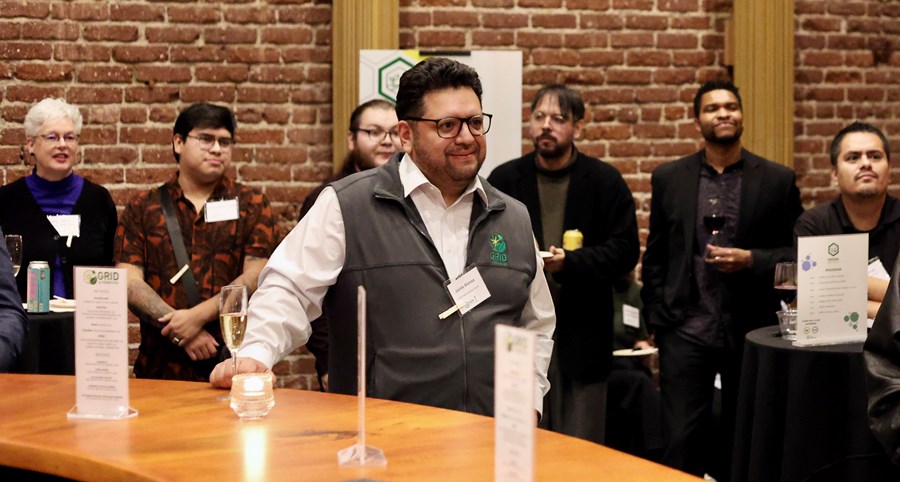
Jaime Alonso at the Green Socials event
GRID Alternatives Southern California Executive Director Jaime Alonso attended the event during a recent visit to the Los Angeles office, where he has been spending time meeting with staff and learning more about the region’s programs. “It’s been great coming to the office and connecting with staff face to face,” Jaime said. “Just getting to know people a little more, hearing what they’re working on, and listening.” Jaime also spoke about the strength of the workforce programs he has seen develop in Los Angeles and the opportunities ahead to expand that work. “It seems incredibly innovative and active in a way that is exciting about the future,” he said. “We’re building out a dedicated Installation Basics Training center in Long Beach that will benefit the community there. That’s something I’m really looking forward to.”
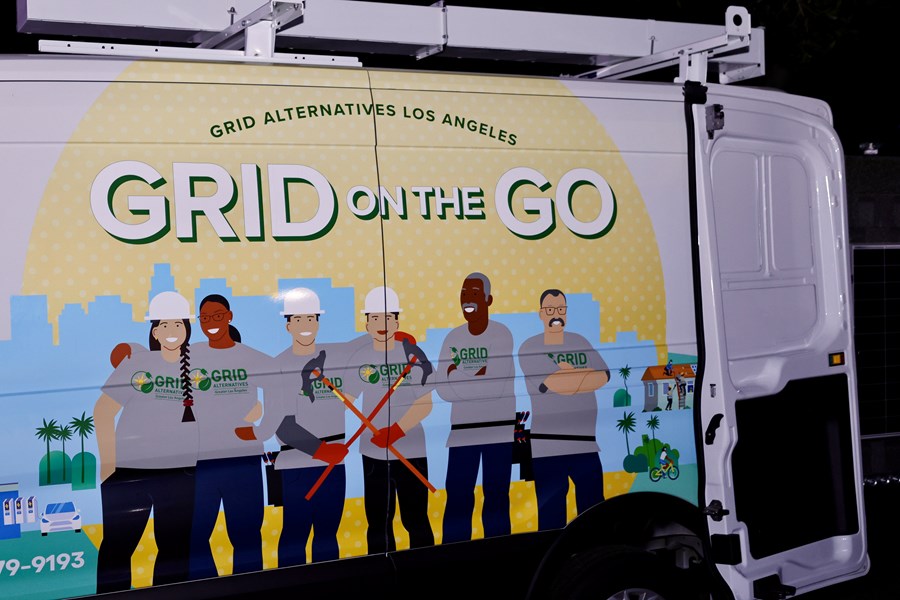
Mobile Training Unit Demonstration
One of the highlights of the evening was a preview of GRID’s Mobile Training Unit, which was displayed outside the venue for guests to explore. The training unit is designed to bring hands-on solar workforce training directly into communities, allowing GRID to reach people who may not have easy access to a traditional training center. Guests were able to tour the vehicle and learn how the program will deliver training on wheels across Southern California ahead of its first scheduled training events.
Inside the venue, a live jazz band helped set the tone for the evening. One of the musicians was a graduate of GRID’s workforce training program, a reminder of how workforce pathways can open doors and keep people connected to the community that supported them.
The gathering was organized in part by Shameka Dixon, Director of Workforce Development for the Los Angeles team, who said the idea for Green Socials grew from a simple observation. “We saw that there was a gap in people connecting, particularly around sustainability and renewable energy,” Shameka said. “This event was created to bring the different spaces that we work with together to create one larger activity.” For Shameka, collaboration is at the heart of workforce development. “Workforce development is a community. Workforce development is collaboration,” she said. “You’re only successful based on the network that you’re able to bring together.”
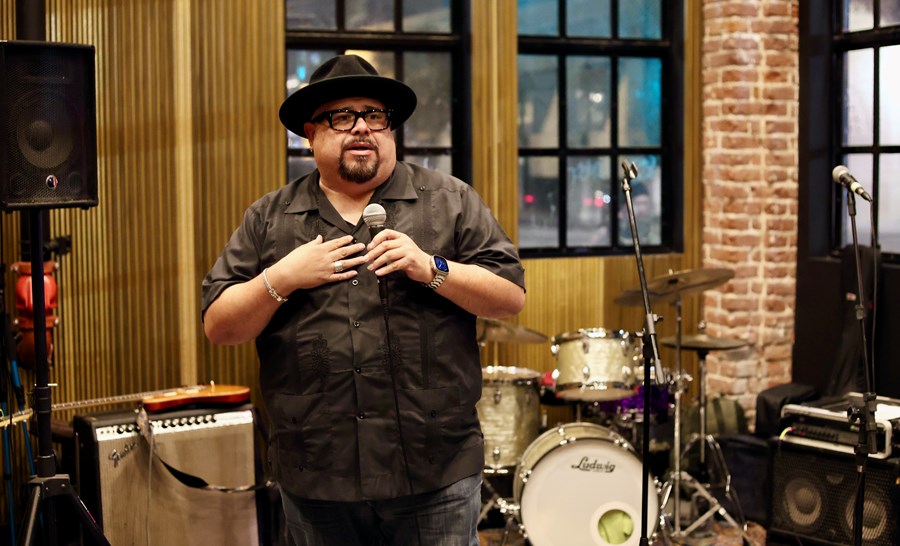
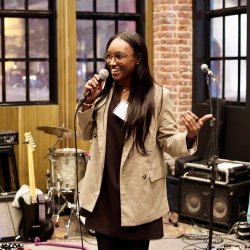
Benjamin Torres, speaking at the Green Socials event
Throughout the evening, conversations reflected that shared purpose. Benjamin Torres, Executive Director of CDTech and a guest speaker at the event, spoke about the importance of ensuring the benefits of the clean energy transition reach communities that have historically been left out. “We need to bring our people into this movement,” Benjamin said. “Climate justice is critical in places like South Central LA. People need to know that there are careers in this green economy and that those opportunities belong in their communities.” Benjamin encouraged attendees to think about how organizations can work together to connect residents to climate solutions, workforce training, and economic opportunity. “This is a movement,” he said. “If we want to bring more investment into our communities around climate resilience, we have to organize and work together.”
Alongside the networking and conversation, guests were also invited to contribute to a canned food drive supporting families in need, reinforcing the community-centered approach that runs through GRID’s work.
As the evening continued, the atmosphere reflected the intention behind Green Socials. It was a space for collaboration, new partnerships, and the kind of informal conversations that often spark the most meaningful ideas. For the Southern California team, the gathering showed how powerful it can be to bring people together around a shared vision for climate action, workforce opportunity, and stronger communities.